

In a nutshell: The most important things at a glance
The Complete Guide to L-Citrulline: What the Science Says About Blood Flow, Workouts and Dosing
When people talk about pre-workout powders and maximizing gym performance, L-Citrulline is a name that almost always comes up. Touted for its ability to deliver an impressive "muscle pump" and delay fatigue, it has become a staple in modern sports nutrition.
But there is much more to this amino acid than heavy lifting and gym floors. While bodybuilders have used it for years to optimize blood flow, recent clinical and biomedical research has uncovered a fascinating therapeutic side to citrulline—revealing its potential role in everything from protecting gut health and cellular integrity to counteracting the hidden physiological tolls of artificial sweeteners.
Whether you are looking to fine-tune your athletic routine or keep up with the latest in preventative health, here is a complete, science-backed look at what citrulline can do, where the hype falls short and why it is quietly becoming one of the most intriguing molecules in modern medicine.

What is Citrulline and How It Works?
L-Citrulline is a nonessential amino acid. Supplementing with citrulline can increase levels of L-Arginine in the body, which can be used to synthesize nitric oxide.
Citrulline supplements usually contain pure L-Citrulline or citrulline malate (see What’s the difference between L-Citrulline and citrulline malate). Some studies instead use watermelon juice or extract as a concentrated source of citrulline, although they also contain other bioactive compounds.
- A Natural Body Compound: Citrulline is a naturally occurring amino acid found in foods like watermelon, as well as produced inside your body.
- Not Used for Protein Building: Unlike famous amino acids like leucine or glutamine, your body does not use citrulline directly to repair or build muscle tissue.
- The Arginine Trick: To increase nitric oxide in your blood, your body needs another amino acid called L-Arginine. However, taking oral arginine directly does not work well because your liver breaks most of it down before it reaches your bloodstream.
- Bypassing the Liver: When you take citrulline, it easily bypasses your liver without being broken down. It travels straight to your kidneys, which efficiently convert it into high levels of L-arginine.
- Boosting Nitric Oxide: Once converted into arginine, it fuels the production of nitric oxide—a gas that signals the smooth muscles in your blood vessels to relax and open up.
- Better Blood Flow: This relaxation expands your blood vessels (vasodilation), allowing blood, oxygen, and vital nutrients to flow more freely through your body and to working muscles.
How to Take It and Forms Available
Pure L-Citrulline vs. Citrulline Malate:
Pure L-Citrulline gives you straight amino acid. Citrulline Malate combines citrulline with malic acid, an compound involved in cellular energy production. Because it includes malic acid, you need a higher overall dose of citrulline malate to get the same amount of actual citrulline.
Watermelon Sources: Watermelon juice and concentrated extracts contain high amounts of natural citrulline, though the exact amount can vary from fruit to fruit.
- Workout Dosing: For exercise performance and reduced soreness, the standard dose studied is 6 to 8 grams of citrulline malate (or 3 to 5 grams of pure L-Citrulline), taken roughly 45 to 60 minutes before training. For those looking for a clean option, unflavored powders like Funvital's Pure L-Citrulline Powder offer a straight, additive-free format that bypasses the fillers found in some commercial pre-workouts.
- Daily Health Dosing: For general cardiovascular support or blood pressure maintenance, studies typically use 3 to 6 grams of pure L-Citrulline taken daily, often split into two or three smaller doses throughout the day.
- General Safety Margin: Clinical studies have safely tested daily amounts ranging anywhere from 1 gram all the way up to 24 grams without severe health issues.
What the Science Says (Where It Helps vs. Where It Doesn't)
Clear and Proven Benefits
- Lower Blood Pressure: The strongest clinical evidence shows that citrulline consistently helps reduce blood pressure, particularly in individuals who already have high blood pressure or pre-hypertension.
- Less Muscle Soreness: People taking citrulline before intense workouts routinely report feeling less sore in the days following heavy exercise (Delayed Onset Muscle Soreness).
Moderate or Mixed Benefits
- Slightly Better Workout Endurance: It can help you squeeze out a couple extra repetitions during weightlifting or high-intensity interval training by delaying muscle fatigue.
- Asthma and Lung Function: Early research shows small potential improvements in breathing metrics and asthma symptoms for some individuals.
- Erectile Function: By improving blood flow, mild to moderate improvements have been noted in early trials for men with mild circulatory-related erectile issues.
Things It Does NOT Do
- Does Not Build Muscle Directly: Citrulline will not directly trigger muscle growth or increase overall muscle mass on its own.
- Does Not Burn Body Fat: Studies show no significant changes in body fat percentage or body composition from citrulline supplementation.
- Does Not Boost Peak Power or Sprint Speed: It does not improve short bursts of maximal strength, sprint capacity, or raw power output.
- Does Not Improve Aerobic Cardio Capacity: It shows no clear effect on endurance metrics like VO2 max or long-distance cycling times.
- Does Not Fix Liver Fat: Trials examining liver fat and liver scarring in metabolic diseases showed no beneficial effect.
- Does Not Prevent Age-Related Muscle Loss: Studies on older adults found no impact on preserving muscle mass or improving general walking speed over time.
Side Effects, Safety and Quality Tips
- Very Well Tolerated: L-Citrulline is considered safe for the vast majority of healthy adults with very few reported adverse effects.
- Stomach Discomfort: The most common side effect is mild digestive upset—such as stomach cramps, nausea, or loose stools—usually happening only when taking large single doses at once on an empty stomach.
- Blood Pressure Medications: Because citrulline relaxes blood vessels to lower blood pressure, combining it with prescription blood pressure drugs or erectile dysfunction medications could cause your blood pressure to drop too low.
- Pregnancy Safety: Research in pregnant women using up to 6 grams per day showed no serious safety problems, but experts still advise caution and medical supervision since long-term data is limited.
- Safe for Athletes: Citrulline is explicitly cleared by the World Anti-Doping Agency (WADA) and is completely legal for drug-tested competitive sports.
- Product Quality Warnings: Independent testing has found that some supplement companies put less malic acid in their "citrulline malate" blends than their labels claim. Stick to reputable brands that use third-party testing to ensure you receive an accurate dose.
Natural Sources: Which Foods Are Rich in Citrulline?
While supplements offer a concentrated dose, citrulline is naturally found in foods belonging to the Cucurbitaceae (gourd) family. Watermelon is by far the richest natural source, with high concentrations found in the rind, the peel, and the deepest central heart of the fruit. Interestingly, citrulline content naturally increases as the fruit ripens, and eating whole watermelon has been shown to acutely increase plasma citrulline levels in the body.
Here is how common cucurbit foods compare in citrulline content (measured in mg per gram of wet fruit weight):
- Watermelon: 2.4 to 2.9 mg/g (the richest natural source)
- Mouse melon (cucamelon): 0.7 mg/g
- Muskmelon (cantaloupe): 0.4 mg/g
- Cucumber: 0.2 to 0.3 mg/g
- Honeydew melon: 0.2 to 0.3 mg/g Zucchini: 0.04 to 0.09 mg/g
- Bitter gourd: 0.03 to 0.05 mg/g.
While you can certainly enjoy these foods for general health and hydration, getting therapeutic doses (such as 3 to 6 grams daily) solely through whole fruit is challenging, which is why supplements are typically used for specific health and fitness goals.
Beyond the Gym: The Surprising New Science of L-Citrulline
Recent clinical and biomedical research into L-Citrulline has revealed several surprising findings that extend far beyond its traditional reputation as a workout supplement or nitric oxide booster.
1. Reversing the Immunological Harm of Artificial Sweeteners
A major study discovered that sucralose (a widely used artificial sweetener) can suppress the immune system and weaken cancer immunotherapies by altering gut bacteria and depleting systemic levels of arginine. Surprisingly, researchers found that supplementing with L-citrulline counteracts this effect, restoring the amino acid levels required for immune cells to fight tumor cells effectively.
2. Protecting the Gut and Cellular Health (Ferroptosis & AMPK)
Beyond vascular health, citrulline plays a direct protective role inside cells:
Ferroptsis Inhibition: Recent studies show citrulline can inhibit ferroptosis—a specific form of regulated cell death driven by iron and lipid damage—protecting tissue integrity during severe oxidative stress.
Intestinal barrier defense: Citrulline activates the metabolic AMPK pathway, helping maintain mucosal lining health in the gut and reducing damage caused by conditions like radiation exposure, celiac disease, or short bowel syndrome.
3. More Effective Than L-Arginine at Raising Arginine Levels
Although citrulline must be converted into arginine in the kidneys to boost nitric oxide, taking pure L-citrulline actually raises blood arginine levels higher and more consistently than taking L-arginine directly. Arginine supplements are largely broken down in the liver and gastrointestinal tract (often causing stomach distress at high doses), whereas citrulline bypasses first-pass hepatic metabolism completely.
4. A Shift in Sports Science: Rethinking Endurance Claims
While pre-workout brands often tout citrulline as an immediate booster for athletic performance, rigorous clinical testing shows a more nuanced picture:
High-Intensity Endurance Limits: In controlled trial testing, weight-based daily doses of citrulline over 10 days failed to improve time-to-exhaustion or cardiorespiratory performance during high-intensity endurance cycling in active adults.
Where It Helps: Its benefits appear isolated primarily to high-volume resistance training (reducing muscle soreness post-workout) rather than aerobic endurance tasks.
Conclusion
Ultimately, L-Citrulline is a remarkably versatile compound. In the gym, it won't perform miracles, but it remains a dependable tool for managing blood pressure, easing muscle soreness and squeezing out extra workout reps. Beyond fitness, however, its ability to bypass liver metabolism, protect cellular integrity and support immune resilience points to a much broader future in clinical medicine.
Whether you choose to enjoy it via a refreshing slice of watermelon or a targeted daily supplement, citrulline offers proven benefits grounded in solid science.
Warning : A varied and balanced diet and a healthy lifestyle are recommended. Not suitable for children, pregnant or breastfeeding women, or individuals who have suffered a heart attack. Individuals taking blood pressure medication, following a low-protein diet, or suffering from kidney or liver disease should consult their doctor before using this product.
This article provides general information only and should not be used for self-diagnosis or self-treatment. It cannot replace a visit to a doctor. Always inform yourself about the use of food supplements by reading the package leaflet or asking your doctor or pharmacist.
First published: : 08.10.2026
Updated: 08.10.2026
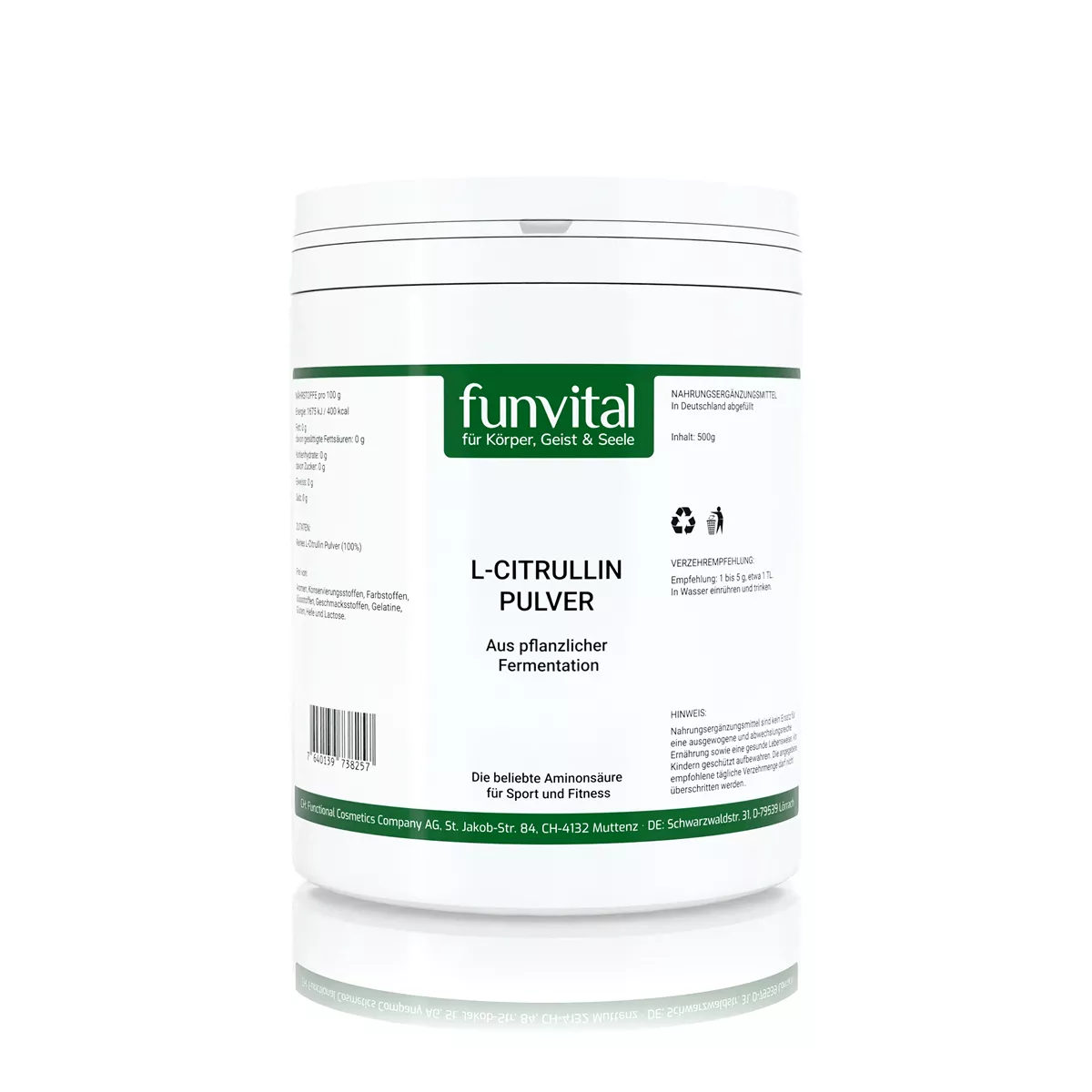
Content: 0.5 Kilogram (€78.00 / 1 Kilogram)
Content: 0.5 Kilogram (€39.80 / 1 Kilogram)
Content: 0.5 Kilogram (€46.40 / 1 Kilogram)