

In a nutshell: The most important things at a glance
The Magic of Magnesium: What It Actually Does for Your Body
You might not think much about magnesium until you find yourself struggling with sleep or muscle cramps, but this essential mineral is involved in virtually every system in the human body. From powering your cells to regulating your heart rhythm and supporting your nervous system, magnesium is a fundamental pillar of daily health.
From social media discussions to biohacking podcasts, magnesium has become one of the most talked-about supplements today. Is the hype justified or is it just another wellness fad?
Here is a breakdown of why magnesium is trending, what it actually does in your body, and how to make sure you’re getting enough.

Why is magnesium trending right now?
While magnesium has always been vital to human health, its recent popularity comes down to three main factors:
- The sleep and stress epidemic: Magnesium plays a critical role in regulating neurotransmitters like GABA, which calms the nervous system. As stress and insomnia levels rise, people are turning to magnesium as a natural relaxation aid.
- Awareness of supplement forms: Consumers are realizing that generic magnesium supplements aren't all the same. Specific forms are tailored to specific needs—like Glycinate for anxiety or L-Threonate for mental focus.
- The "subclinical" gap: While severe clinical deficiency is rare, experts estimate that up to 50% to 60% of adults in Western countries fall short of the Recommended Dietary Allowance (RDA) due to soil depletion, processed diets and high-stress lifestyles.
What is magnesium and why do we need it?
Magnesium is the second most abundant intracellular cation in the body, serving as a mandatory helper molecule (cofactor) for more than 300 biochemical reactions. The adult body contains roughly 25 grams of magnesium, with 50% to 60% stored in the skeleton and the rest in soft tissues like muscle. Less than 1% floats in the bloodstream.
Here are the primary jobs magnesium handles every day:
- Energy production : Every cell relies on adenosine triphosphate (ATP) for energy. ATP must bind to a magnesium ion to form MgATP to be utilized by metabolic processes.
- Muscle movement and relaxation : Magnesium and calcium work together like a chemical brake and gas pedal. Calcium causes muscle fibers to contract, while magnesium enables them to relax.
- Nervous system and brain function : Magnesium helps regulate ion channels in nerve cells and calms the nervous system to promote healthy sleep patterns.
- Bone integrity : Over half of your body's magnesium is stored in bone tissue, playing a major structural role alongside calcium and phosphorus while helping activate vitamin D.
Are you getting enough?
The Recommended Dietary Allowance (RDA) for adults is approximately 320 mg per day for women and 420 mg per day for men.
While severe deficiency (hypomagnesemia) is rare in healthy individuals, subclinical insufficiency is widespread. Extra magnesium is especially important for individuals with documented deficiency or pregnancy complications like preeclampsia. Limited evidence also suggests supplemental magnesium may support people dealing with cardiovascular issues, migraines, anxiety, diabetes, or muscle soreness after exercise.
Early symptoms and risk factors
Early signs of low magnesium intake include:
- Mild fatigue or weakness
- Loss of appetite or mild nausea
- Muscle twitches, cramps, or restless legs
- Difficulty staying asleep.
If left severe and untreated, low magnesium can lead to numbness in the limbs and abnormal heart rhythms. Common causes include gastrointestinal conditions (like Crohn's disease), kidney disease, alcohol use disorder, and long-term use of medications like diuretics. Deficiency is also common in adults over age 70 due to lower absorption and diet changes.
Did you know? Stress and caffeine drain magnesium. When your body experiences chronic stress or high cortisol levels, the kidneys excrete magnesium at a much higher rate. Furthermore, high caffeine and alcohol intake act as mild diuretics, causing your body to flush out magnesium reserves in urine before they can be properly used.
Choosing the right supplement form
If you choose to supplement, selecting the right form makes a significant difference:
- Magnesium glycinate: Best for sleep and stress relief; highly gentle on the stomach.
- Magnesium citrate: Readily absorbed; supports digestion and acts as a mild laxative at higher doses.
- Magnesium l-threonate: Crosses the blood-brain barrier efficiently; studied for cognitive health and focus.
- Magnesium malate: Bound to malic acid; often taken to support energy production and muscle soreness.
- Magnesium oxide: Lower absorption rate; primarily used for heartburn or acute constipation.
Natural food sources of magnesium
The ideal way to maintain your magnesium levels is through a whole-food diet rich in leafy greens, nuts, seeds, and whole grains. Because magnesium sits at the center of the chlorophyll molecule, green vegetables are exceptionally rich sources.
Here is the magnesium content per food servings:
- Pumpkin seeds (shelled): 30 g – 150 mg magnesium
- Brazil nuts: 30 g (6 kernels) – 107 mg magnesium
- Oat bran cereal, dry: 45 g – 96 mg
- Raw cashews: 30 g (17 kernels) – 83 mg
- Mackerel, cooked: 85 g – 82 mg
- Dark chocolate (70–85% cocoa): 30 g – 68 mg
- Spinach, frozen and cooked: 120 g – 78 mg
- Almonds: 30 g (24 kernels) – 77 mg
- Shredded wheat cereal: 2 biscuits – 61 mg
- Whole wheat cereal, dry: 35 g – 59 mg
- Peanuts: 30 g (28 peanuts) – 48 mg
- Hazelnuts: 30 g (23 kernels) – 46 mg
- Brown rice, medium-grain, cooked: 100 g – 43 mg
- Chickpeas, cooked: 120 g – 39 mg
- Banana: 1 medium size – 32 mg
- Avocado: ½ medium size – 29 mg
- Milk, 1% fat: 250 ml – 28 mg
Nutrient interactions
Magnesium does not act in isolation within the body; its absorption and utilization are influenced by several other nutrients:
- Zinc : High doses of supplemental zinc may interfere with magnesium absorption. One study reported that zinc supplements of 142 mg/day significantly decreased magnesium balance in healthy adult males.
- Fiber : Large increases in dietary fiber intake can decrease magnesium utilization in experimental settings, though the impact on individuals eating a varied diet outside the laboratory is less clear.
- Protein : Dietary protein intake can affect absorption; studies show magnesium absorption drops when protein intake falls below 30 g per day.
- Vitamin D and calcium : The active form of vitamin D (calcitriol) slightly increases intestinal magnesium absorption. Conversely, inadequate blood magnesium levels can cause resistance to parathyroid hormone (PTH) and vitamin D actions.
Safety, upper limits and precautions
Getting magnesium from food carries virtually no risk of toxicity because healthy kidneys filter out any excess in urine. However, supplemental magnesium requires a few considerations:
- Tolerable upper limit: Supplemental magnesium should generally be kept under 350 mg per day (from supplements alone) to avoid digestive upset or diarrhea, unless prescribed higher by a doctor.
- Kidney health: Anyone with impaired kidney function must consult a doctor before taking supplements, as excess magnesium cannot be excreted properly (leading to hypermagnesemia).
Key Takeaways
- Magnesium quietly powers more than 300 vital biochemical reactions every single day, keeping your energy high, your muscles loose and your nervous system calm.
- Your plate is your best defense: You don't always need a pill bottle. Loading up on delicious whole foods like leafy greens, crunchy nuts, and wholesome grains gives your body the natural foundation it craves.
- Not all supplements are created equal: If you decide to add a supplement, matching the right form to your goals, like using gentle glycinate for sleep or citrate for digestion, changes everything.
- Smart and safe supplementation: Always respect your body's limits by keeping extra supplements under 350 mg a day, and chat with your doctor before diving in, especially if kidney health is a factor.
First published: 23.10.2026
Updated: 23.10.2026
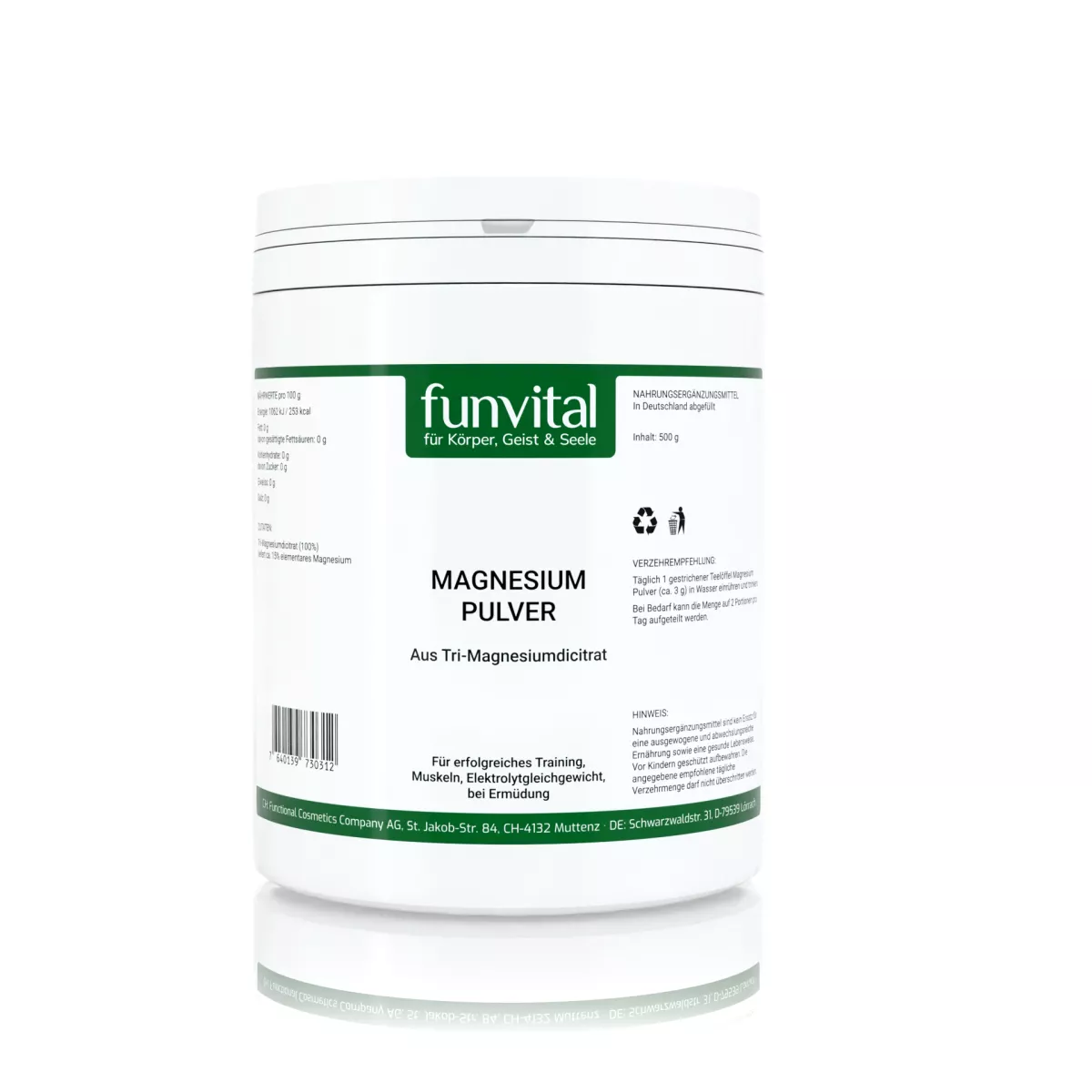
Content: 0.5 Kilogram (€39.80 / 1 Kilogram)
Content: 0.5 Kilogram (€25.80 / 1 Kilogram)
Content: 0.5 Kilogram (€78.00 / 1 Kilogram)