

In a nutshell: The most important things at a glance
Breathe Naturally: Why Saline Nasal Rinses and Plant-Based Sprays Are Key to Sinus Recovery
Sinusitis, also known as rhinosinusitis or a sinus infection, is an inflammation of the mucous membranes in the sinuses. Typical symptoms include facial pressure, stuffy nose, difficulty breathing through the nose, headaches and impaired sense of smell. Sinusitis can be acute (acute sinusitis), typically following a cold, or chronic (chronic sinusitis) if symptoms persist for more than three months.
Nearly all sinus infection patients will recover from their infections, but an unfortunate few may develop complications. By understanding sinusitis, you can minimize your chances of developing the problem, and if sinusitis strikes, you'll know how to speed your recovery and lower your risk of complications.

The sinuses at a glance
The sinuses are air-filled cavities located behind the nose, eyes, and cheeks, and are connected to the nasal cavity via small openings (ostia). They extend from the forehead to the upper jaw and are divided into the frontal cavity, maxillary sinus cavity, sphenoid sinus cavity and ethmoidal cells (approx. 10 chambers). Because sinuses surround the nose, they are also known as the "paranasal sinuses." Each of us has four pairs of sinuses.
Each of the sinuses is lined by a membrane that produces mucus. When you're healthy, the mucus is a thin, watery fluid that flows freely from your sinuses into the upper part of your nose. But when your sinuses become inflamed, the mucus gets thick and sticky, so it can't flow through the tiny openings, called ostia, that lead to the nose. Fluid builds up in the sinuses, causing pressure and pain, and just like that, you've got sinusitis.
Sinusitis: causes and how it develops
Sinusitis is an infection typically triggered by viruses, bacteria, or a combination of both. Normally, these germs pass through without issue. However, if the narrow channels that drain your sinuses become blocked, trapped fluid can easily turn into an infection. Because of this, restoring proper drainage is the absolute key to treatment.
1. The role of the common cold
The common cold is the primary trigger for sinus issues. On average, adults catch two to three colds a year, while children get six to ten. Because colds are viral, antibiotics will not cure them. However, cold viruses cause nasal tissues to swell and alter your mucus, disrupting its natural ability to clear out germs and leading to blockages.
2. Cold vs. sinusitis: knowing the difference
It is common to feel sinus pressure during a cold, but this doesn't automatically mean you have a bacterial sinus infection or need antibiotics. In fact, only about 1 in 100 colds actually turns into sinusitis.
To keep the odds in your favour, focus on keeping your sinuses draining. You can also protect yourself by blowing your nose gently without pinching it shut, as forceful blowing can accidentally push bacteria deeper into your sinus cavities.
3. Other common triggers
Beyond colds, several other factors can obstruct your airways and cause a sinus infection:
- Allergies
- Cigarette smoke and airborne irritants
- Sudden shifts in barometric pressure (such as from flying or scuba diving)
- Nasal polyps
- A deviated septum
Symptoms
Painful pressure is the main symptom of a sinus infection. Depending on which sinus is involved, you feel pain in:
- Forehead (frontal sinusitis)
- Over the cheek or in the upper jaw and teeth (maxillary sinusitis)
- Behind the eyes (ethmoid or sphenoid sinusitis)
- At the top of the head (sphenoid sinusitis)
Sinus pain usually increases when you bend forward.
While painful pressure is the primary sign of a sinus infection, you may also experience the following symptoms:
- Nasal congestion accompanied by thick, discolored mucus
- Post-nasal drip, which occurs when mucus drains down the back of your throat, potentially causing bad breath, a foul taste, or a cough
- Impaired sense of smell and taste
- General fatigue, body aches and a fever
Sinusitis diagnosis
In most cases, your doctor can diagnose sinusitis simply by asking about your symptoms. If pressing over your sinuses causes pain, sinusitis is likely. CT scans can be very helpful if your sinusitis is unusually severe or if your doctor suspects complications; plain x-rays are less useful. ENT (ear, nose, and throat) specialists can also diagnose sinusitis by looking up your nose with a scope.
Treatment and symptoms relief
The treatment of sinusitis always depends on the cause and course of the illness. The aim is to alleviate the symptoms, support the healing process and prevent potential complications. A distinction is made between measures for acute and chronic forms.
1. Treatment of acute sinusitis
- Decongestant nasal sprays (maximum of seven days)
- Painkillers and fever reducers such as ibuprofen or paracetamol
- Inhalations with saline or essential oils
- Antibiotics, only for bacterial infections and severe cases
- Seawater containing nasal wash
2. Treatment of chronic sinusitis
- Nasal sprays containing cortisone for anti-inflammation
- Treatment of allergies (e.g. antihistamines)
- Surgical interventions (e.g. endoscopic sinus surgery), when conservative measures are not sufficient
Prevention
A strong immune system plays a key role in fending off infections such as sinusitis. A functioning immune system and proper mucocilliary clearance make it difficult for pathogens to take hold. Taking a few proactive steps can go a long way in keeping your nasal passages healthy and clear. One of the simplest, cheapest, and most effective ways to prevent and treat sinus problems is nasal irrigation of which we explain more in a separate section.
Here is how you can protect your sinuses and manage early symptoms effectively:
- A diet rich in vitamins and nutrients
- Regular exercise
- Adequate sleep, relaxation and conscious recovery
- Stay well-hydrated: Drink plenty of fluids to keep your mucus thin.
- Avoid irritants: Stay away from tobacco smoke and other irritating chemical fumes.
- Manage your allergies: Do your best to avoid your specific allergy triggers.
- Prevent colds: Wash your hands properly and keep your distance from people who are sick.
- Blow your nose correctly: If you do catch a cold, blow your nose gently to prevent bacteria from being forced up into your sinuses.
- Treat early symptoms promptly: Use steam inhalation, decongestants, and nasal irrigation as soon as sinusitis symptoms start.
- Avoid antihistamines unless your doctor prescribes one for you. Antihistamines make mucus thick and hard to drain.
- Nasal rinses and sprays with natural ingredients can have a soothing effect and help loosen stuck mucus.
Saline nasal irrigation - preventing and treating sinusitis starts with a nasal wash
Saline nasal irrigation is a safe and easy way to rinse your sinuses. It can help relieve symptoms related to a sinus infection, allergies, a cold or other upper respiratory conditions. Neti pots, nasal wash bottles and pre-filled containers are all excellent options if you want to try nasal irrigation.
Why nasal wash works:
- Mechanical Cleansing: Rinses away dust, pollen, and thick or dried mucus.
- Reduces Swelling: The salt content draws out excess moisture through osmosis, shrinking swollen nasal tissues.
- Improves Ciliary Function: Helps the tiny hairs inside your sinuses sweep away pathogens more efficiently.
- Boosts Medication : Rinsing before using nasal sprays allows the medicine to reach the sinus cavities more effectively.
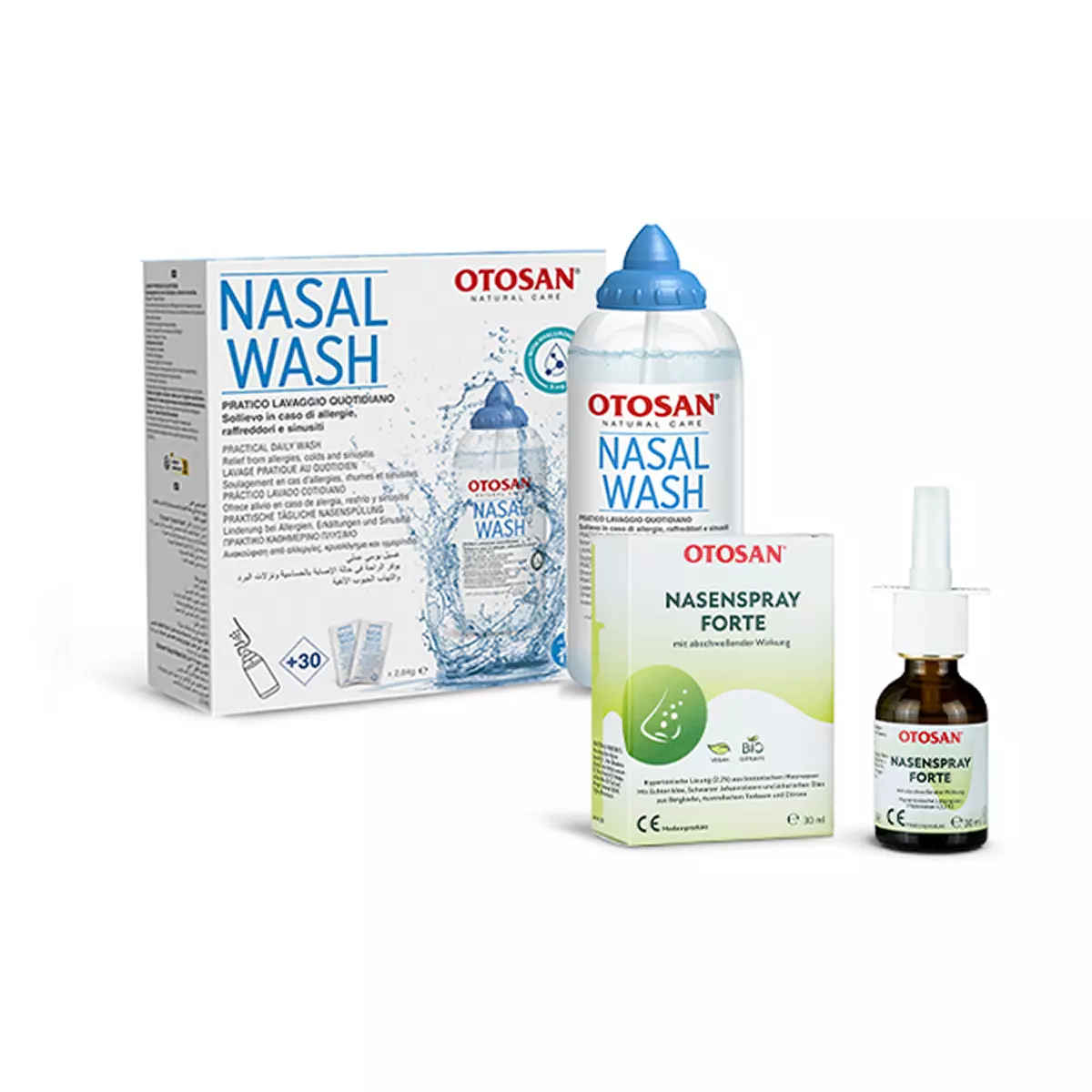
Otosan® Nasal Wash is particularly recommended nasal irrigation product as it contains hyaluronic acid, and five clinical studies have shown it accelerates the healing process and is considerably more effective than rinses based solely on saline. It also provides relief for:
- Stuffy nose
- Colds and allergic rhinitis
- Acute and chronic sinusitis
- Hypertrophic rhinitis during pregnancy
- Snoring
- Exposure to dry or polluted environments, smoke, or other airborne pollutants
- Before and after surgical procedures
- Daily cleaning of the nasal cavities.
Understanding Nasal Sprays: Traditional Decongestants vs. Natural Alternatives
To find relief for a congested nose, many people look for a nasal sprays. However, these products differ fundamentally in their mode of action and their ingredients.
1. Decongestant Nasal Spray (DNS)
DNS sprays are the time-tested classic for acute infections. They contain vasoconstrictive active ingredients that quickly reduce swelling in the nasal mucous membranes. The effect usually kicks in within a few minutes and lasts for several hours.
Due to the highly potent ingredients, these nasal sprays should not be used for longer than one week at a time. Long-term use carries the risk of a dependency effect, which can damage the mucous membranes and lead to addiction.
2. The Gentle Alternative - Nasal sprays with seawater and other natural ingredients
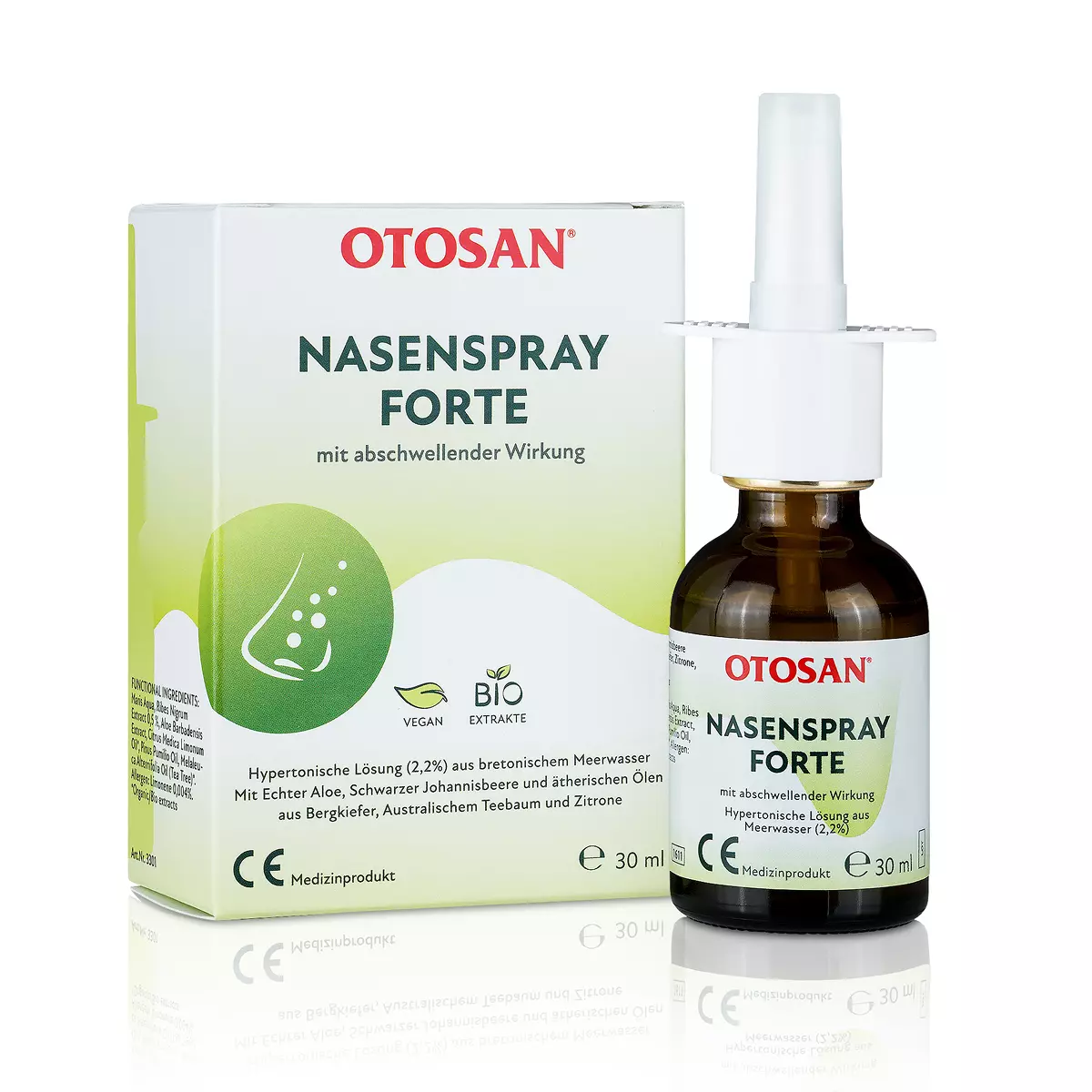
As a natural alternative to conventional nasal sprays, a saline solution made from seawater humidifies the nasal mucous membranes and gently loosens stuck mucus. Otosan® Nasal Sprays do not contain artificially produced active ingredients that could trigger a dependency effect. They are therefore particularly suitable for long-term use – also for hay fever – and are ideal for the daily care of the nasal mucous membranes in winter.
Otosan® Nasal Sprays are designed not only to moisturise, but also to ensure free breathing, and come with many other benefits:
- Natural Nasal Spray with Plant-Based Ingredients
- Cleanses the nose
- Decongestant effect
- With organic plant extracts
- With sea water from Brittany
- No rebound & dependency effect
- Free from vasoconstrictive additives
- Effectiveness confirmed. Medical device
- Vegan.
Nasal Spray in Pregnancy
Pregnant women should only use nasal sprays after consulting with their doctor and only for a few days. Decongestant nasal sprays have a vasoconstrictive effect, which can impair blood flow to the placenta. Special nasal sprays with a lower concentration of active ingredients, or purely plant and natural ingredients based nasap sprays are often a better choice.
The Dangers of Nasal Spray Dependency
If a decongestant nasal spray is used over an extended period, it can lead to a so-called rebound effect: as soon as the effect wears off, the mucous membranes swell up even more severely. This vicious cycle can lead to increasing damage and dependency. Signs of damaged nasal mucous membranes include:
- Drying and crusting
- Frequent nosebleeds
- Chronic rhinitis.
Acute Sinusitis in Children
Because a child’s sinuses are not yet fully formed, sinusitis typically only develops from early childhood onwards. The maxillary and ethmoid sinuses are the first to develop, but full sinus growth is not complete until between the ages of 15 and 20.
Due to these developing facial structures, sinus inflammation in children can spread more rapidly to adjacent areas like the eye sockets. Additionally, because the nasal cavity connects directly to the ears, young children are highly susceptible to middle ear infections (acute otitis media) or inflammation of the Eustachian tube (Eustachian tube catarrh).
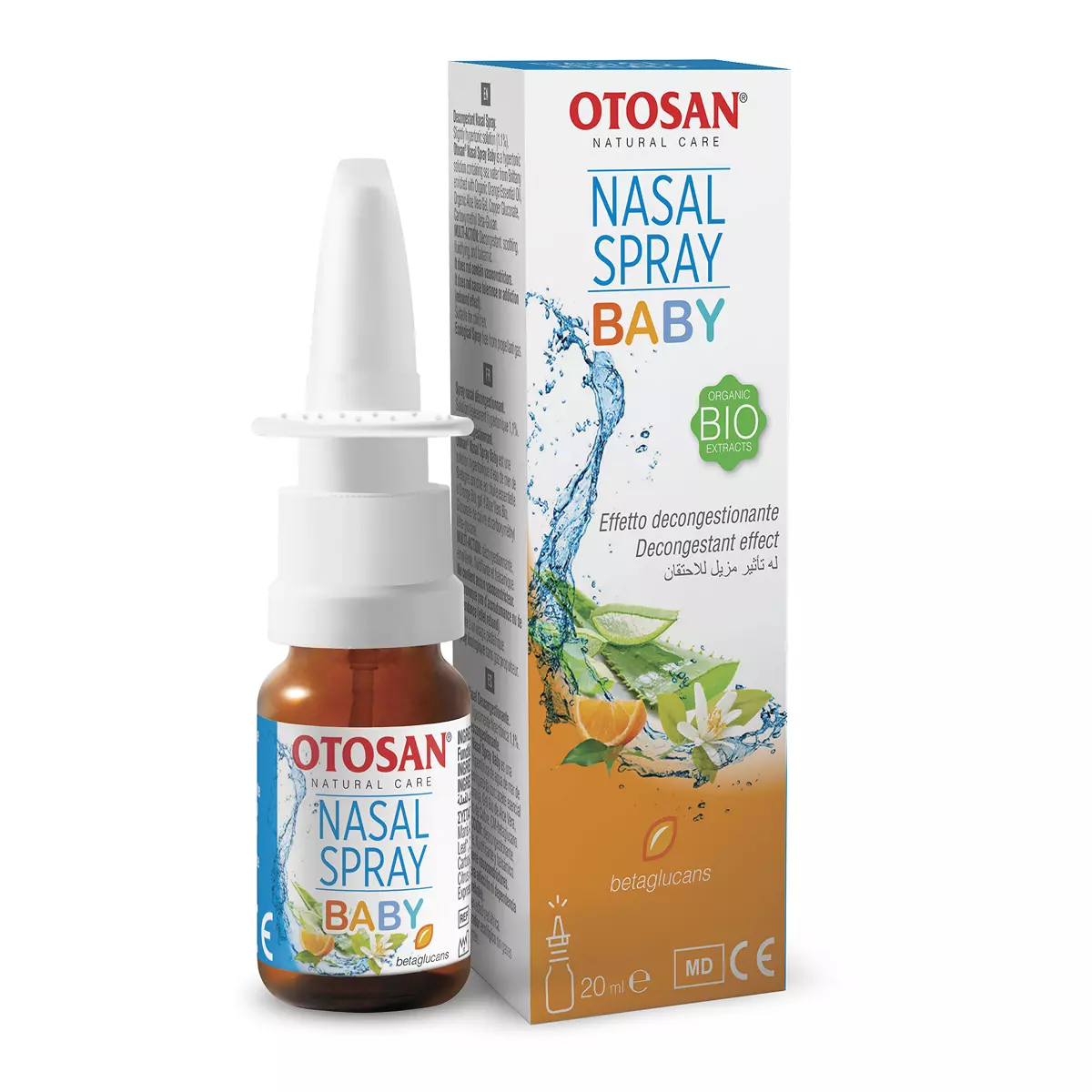
Because of the gentle nature of the nose and sinuses of children, it might me a good idea to bring relief to their discomfort with plant-based organic ingredients and seawater based products; like specially designed, more ergonomic and smaller applicator Otosan® Nasal Spray for babies and children (from 6 months to 12 years). The smaller applicator ensures an injury-free and friction-free application for children, guaranteeing optimal moistening of the nasal cavities. Can be used frequently to also support sinusitis prevention.
Complications to keep in mind
The sinuses are surrounded by critical structures, including the brain, the eyes, and the skull. On rare occasions, sinus infections can spread to one of these areas. Notify your doctor promptly if your sinusitis gets worse with one or more of these warning symptoms:
- high fever
- severe headache
- mental confusion or stiff neck
- swelling of the cheek, forehead or roof of the mouth
- a swollen, red, painful eye
- impaired vision
- difficulty breathing, swallowing or speaking.
Fortunately, none of these problems is likely. Still, they serve to remind us that sinusitis is not just the sniffles. Patients with weakened immune systems always require careful medical evaluation and treatment for sinusitis.
-------------------------
This article provides general information only and should not be used for self-diagnosis or self-treatment. It cannot replace a visit to a doctor. Always inform yourself about the use of over-the-counter medications by reading the package insert or asking your doctor or pharmacist.
Published: 16.06.2025
Updated: 16.06.2026

Content: 0.02 Litre (€395.00 / 1 Litre)
 (1472)
Content: 0.03 Litre (€263.33 / 1 Litre)