In a nutshell: The most important things at a glance
Nasal Sprays & Kids: How to Relieve Congestion and Potentially Avoid Surgery
Seeing your child struggle with a stuffy nose, sniffling, breathing noisily or having trouble feeding, can be alarming. While most congestion cases are a manageable part of childhood, knowing when to provide care at home and when to seek medical help is essential. In this article we will explain you how to recognise different symptoms, how to best take care of them, and also some new interesting research on nasal sprays and the quality of sleep for children.

Recognizing nasal congestion
Because children have tiny nasal passages, even small amounts of mucus can cause significant blockage, leading to irritability, breathing difficulties, or sleep disruption. If you're wondering how to know if your baby has a stuffy nose, these signs can help guide you. Since babies can’t clear their own nasal passages, even mild blockage may lead to discomfort or irritability.
Common signs include:
- A stuffy nose accompanied by noisy or labored breathing.
- Difficulty feeding, as infants rely on their noses to breathe while eating.
- Frequent waking during sleep.
- Visible mucus or nasal discharge.
Common causes of nasal congestion
Children may experience nasal congestion when the tissues inside the nose become inflamed and swollen, often due to excess mucus build-up. Children’s nares are smaller than adults, making them more susceptible to noisy breathing or congestion due to small amounts of nasal fluid or mucus. Your child's nasal blockage can make it harder for them to breathe through their nose, leading to discomfort, especially during feeding or sleep.
Here are the common causes of a baby’s nasal congestion:
- Common cold viruses: The most frequent cause of baby congestion; infants may catch 6 to 8 colds a year during early childhood.
- Respiratory syncytial virus (RSV): A leading cause of upper respiratory infections in babies during their first 2 years of life.
- Influenza (flu): Can result in a stuffy nose in infants and lead to more severe respiratory symptoms and usually accompanied by higher fevers.
- COVID-19: Babies can contract COVID-19, which may present in them as cold-like symptoms. The CDC has reported that babies under 6 months are associated with similar hospitalization rates as adults in the 65-74 years old range.
In most cases, a child’s nasal congestion is mild and manageable at home. But if your little one seems to be having trouble breathing, feeding or sleeping, reach out to your healthcare provider for further guidance.
Home Care Tips
For mild congestion, you can often provide relief at home. It is most effective to perform these steps every few hours and about 15–20 minutes before feeding or bedtime:
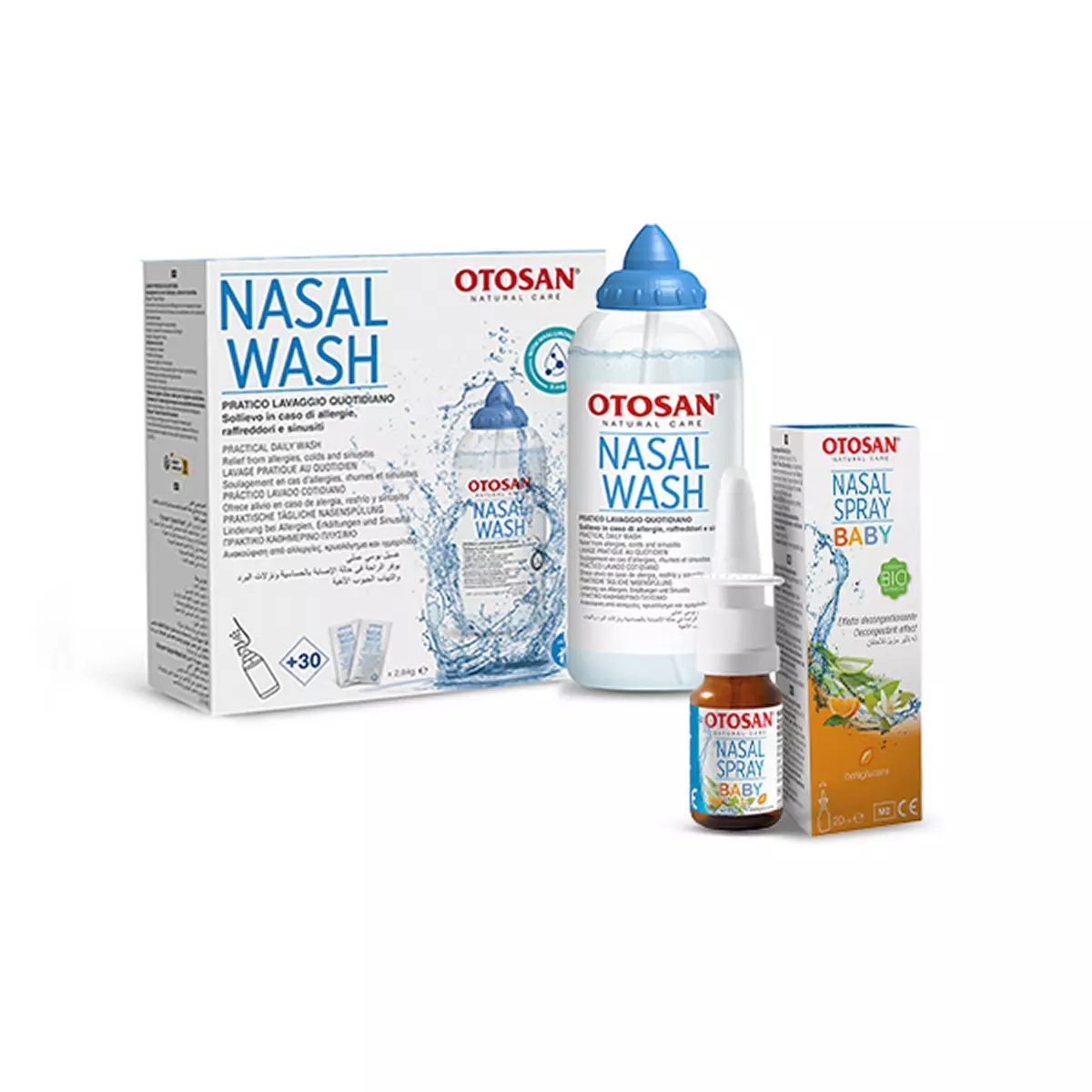
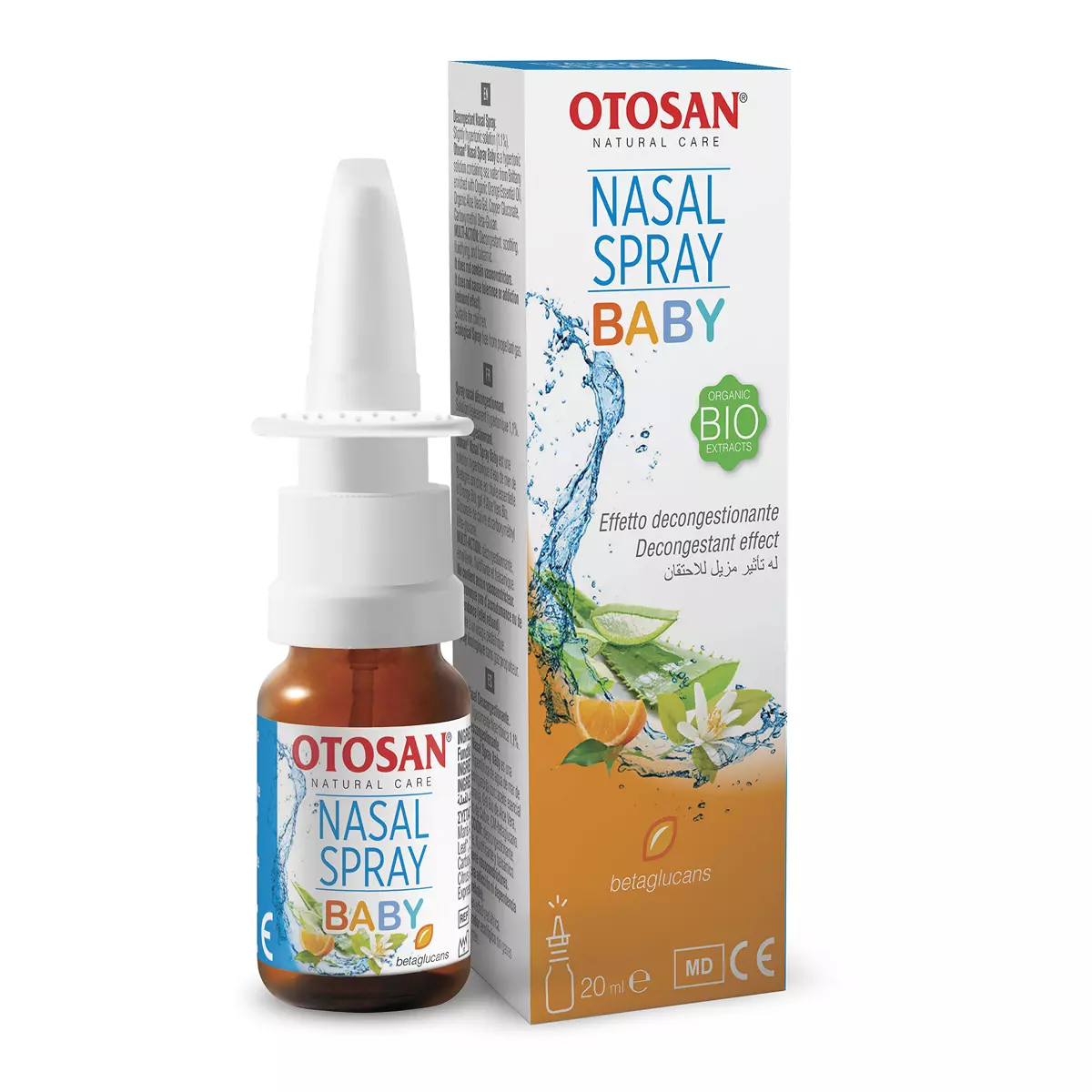
- Try saline sprays or and a bulb syringe to clear your baby’s nose. Saline sprays like vegan, organic and plant based Otosan® Nasal Spray for Baby & Child which is designed to be safe and effective for delicate nasal passages. With its specially designed, ergonomic, and shorter applicator, it ensures an injury-free and friction-free application for children, guaranteeing optimal moistening of the small nasal cavities.
- Use a cool-mist humidifier or try baby steam therapy to loosen mucus
- Offer extra feedings to keep your baby hydrated, and for older children make sure they are well hydrated too.
- Nasal irrigation: natural saline nasal wash solution, ideal for daily nasal hygiene and for the treatment of allergies, colds, and sinusitis. The nose is constantly in contact with a large amount of allergens, impurities, and powder pollutants. Keeping it clean and clear is the first step to preventing alterations of the nasal mucosa (stuffy nose, itching, dryness) and allowing for correct airflow through the respiratory tract. *Five clinical studies recently carried out on adults and children with a saline solution enriched with hyaluronic acid have shown that Otosan® Nasal Wash accelerates the healing process and is considerably more effective than rinses based solely on saline. This Otosan® Nasal Wash is recommended for children from the age of 6.
- Watch for changes in mucus color (clear is normal—green or yellow may signal infection).
Nighttime Congestion: What to Avoid
Do not prop up the mattress
: Avoid using pillows, towels, or wedges to create an incline.
- Follow safe sleep guidelines : Always place your baby flat on their back on a firm, level surface.
- Avoid breathing risks : Propping a baby can cause the neck to bend, which may interfere with their ability to breathe.
- The better alternative : Use saline nasal spray and gentle suctioning before sleep to clear the nose, then place your baby flat on their back.
When to seek immediate medical attention
Focus on how your baby is breathing rather than just how they sound. Seek emergency care immediately if you notice:
- Nasal flaring: The nostrils spread wide with each breath.
- Retractions: The skin pulls inward between the ribs or at the base of the throat.
- Grunting: A short, low sound made at the end of every breath.
- Breathing pauses: Any pause lasting longer than 10 seconds (especially in infants under 6 months).
- Color changes: Blue or gray skin around the lips, tongue, or fingernails.
Any of these signs warrants an emergency room visit and indicate your child’s body is struggling to get enough oxygen.
Study: A Breakthrough for Sleep-Disordered Breathing and Saline Spray
Recent clinical research, including the MIST+ study (2026), has highlighted that simple, non-invasive saline spray can often be as effective as more aggressive interventions for children struggling with snoring or sleep-disordered breathing.
- The Findings : In a trial of 150 children, a 6–12 week course of daily saline nasal spray was highly effective.
- The Results : Nearly one in three children saw their symptoms resolve completely with saline alone. After 12 weeks, 50% of participants had recovered sufficiently to avoid the need for specialist care or surgery.
- The Recommendation : Experts suggest that, under the guidance of a GP, families should consider a 12-week trial of saline spray to manage symptoms of obstructive sleep-disordered breathing before pursuing more invasive options.
- Getting Started : To support this 12-week routine, many parents prefer using a gentle, child-specific product such as this vegan organic plant based Otosan® Nasal Spray for Baby & Child which is designed to be safe and effective for delicate nasal passages. With its specially designed, ergonomic, and shorter applicator, it ensures an injury-free and friction-free application for children, guaranteeing optimal moistening of the small nasal cavities.
----------------
This article provides general information only and should not be used for self-diagnosis or self-treatment. It
cannot replace a visit to a doctor. Always inform yourself about the use of over-the-counter medications by reading
the package insert or asking your doctor or pharmacist.
First published: 18.06.2026
Modified: 18.06.2026

Content: 0.02 Litre (€395.00 / 1 Litre)
Content: 0.15 Litre (€79.33 / 1 Litre)